Copper and Copper-Nickel Pipe Flanges
C70600 90/10, C71500 70/30, aluminum bronze, nickel-aluminum bronze and naval brass. Machined to ASME B16.5 and B16.24 patterns for seawater, marine, desalination and HVAC service.
What we supply
Copper alloy flanges for water that ruins steel
Texas Flange has supplied ASME and non-code industrial pipe flanges since 1986. Copper alloys are a specialty corner of that catalog. They exist in a piping system for one reason: the fluid is seawater, brackish water, or a brine that would destroy carbon steel and pit stainless.
Copper-nickel is the workhorse. It forms a tight cuprous oxide film in clean, aerated seawater and then simply stops corroding. It also resists macrofouling, so barnacles and mussels do not take hold in the bore. That combination is why naval architects, desalination contractors and offshore platform designers keep specifying it decades after cheaper alloys were supposed to replace it.
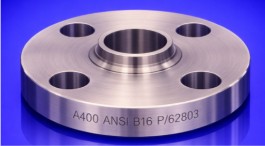
We machine copper alloy flanges from plate, bar and forgings to the dimensional pattern the project calls for, whether that is an ASME B16.5 footprint, a cast B16.24 pattern, or a drawing off a naval spec.
Materials
The copper alloys we flange
Copper alloy is not one material. The grades below behave differently in seawater, at temperature, and under load. The right pick is usually driven by flow velocity and by what the rest of the system is made of.
| Alloy | UNS | Nominal composition | Where it belongs |
|---|---|---|---|
| 90/10 copper-nickel | C70600 | Cu bal, 10% Ni, 1.0 to 1.8% Fe | General seawater piping, firewater, ballast, condenser water |
| 70/30 copper-nickel | C71500 | Cu bal, 30% Ni, 0.4 to 1.0% Fe | Higher velocity, higher temperature, higher strength seawater duty |
| Commercial copper | C10200 / C11000 | 99.9% Cu | Process, refrigeration and electrical service, not seawater velocity duty |
| Naval brass | C46400 | Cu, 39% Zn, 1% Sn | Marine hardware and moderate seawater, watch dezincification |
| Aluminum bronze | C61400 / C63000 | Cu, 6 to 10% Al, Fe, Ni | Erosion and cavitation service, pumps, higher strength than Cu-Ni |
| Nickel-aluminum bronze | C95800 | Cu, 9% Al, 4% Ni, 4% Fe | Cast seawater valve and pump bodies, propeller-grade castings |
| Red brass casting | C83600 | 85% Cu, 5% Sn, 5% Pb, 5% Zn | The classic cast bronze flange material behind ASME B16.24 |
| Monel 400 | N04400 | 63% Ni, 30% Cu | Nickel-copper. Seawater, hydrofluoric acid, high strength, high cost |
The iron is deliberate. Both copper-nickel grades carry a controlled iron addition, and it is not a tramp element. Iron is what makes the protective film resist erosion-corrosion at flow. A heat that runs low on iron will look fine on a chemistry report and still wash out in service, so hold the supplier to the ASTM range rather than just to the nickel content.
Beyond copper, Texas Flange carries the full industrial materials list, including carbon steel, chrome alloys, stainless, aluminum, Hastelloy, Inconel, Incoloy, duplex and titanium. See copper alloy grades for the material detail, or the Texas Flange catalog for everything else.
Standards
B16.24 and B16.5 do different jobs
ASME B16.24, cast copper alloy
This is the copper alloy flange standard proper. It covers cast copper alloy pipe flanges and flanged fittings, in bronze casting grades such as C83600. Class 150 and Class 300 are the workhorses, and the current edition carries higher classes as well.
The useful detail: B16.24 Class 150 drilling follows the same bolt template as the steel Class 150 pattern. A bronze flange therefore bolts straight to a steel one, which is exactly why the galvanic question below comes up so often.
ASME B16.5 patterns in copper material
B16.5 is a steel flange standard. It sets the dimensions, not the metallurgy. When a project wants a B16.5 Class 150 or Class 300 footprint in 90/10 or 70/30, we machine that pattern from copper-nickel plate, bar or forging.
The flange is then dimensionally a B16.5 flange in a material B16.5 does not rate. The pressure-temperature rating has to come from the design code and the alloy allowables, not from the B16.5 rating table. Your engineer signs that.
Material specifications you will see on the line item
| Spec | Product form | Typical use here |
|---|---|---|
ASTM B171 | Copper alloy plate and sheet for pressure vessels and condensers | Plate and ring flanges cut from Cu-Ni plate |
ASTM B466 | Seamless copper-nickel pipe and tube | The mating pipe on weld neck and slip-on work |
ASTM B467 | Welded copper-nickel pipe | Large diameter seawater headers |
ASTM B151 | Copper-nickel rod, bar and shapes | Machined small-bore flanges and fittings |
ASTM B62 | Composition bronze castings | Cast bronze flanges on the B16.24 pattern |
ASTM B148 | Aluminum bronze and nickel-aluminum bronze castings | C95800 valve, pump and seawater bodies |
MIL-F-1183 | Naval pipe fittings and flanges | Shipboard work to Navy requirements |
On pressure and temperature. Copper alloys lose strength far earlier than steel, and the derating curve is steep. Most copper alloy flange service sits well under 400 degrees F. Do not read a copper flange rating off an ASME B16.5 steel table. The allowable stress comes from the design code, ASME B31.3 for process piping, and the rating has to be worked from there. Send us the design conditions and we will tell you whether the alloy and thickness carry it.
Service conditions
What copper-nickel is good at, and what kills it
It is good at
- Clean, aerated, moving seawater. The protective film forms and then holds. Corrosion rates fall over the first weeks in service rather than rising.
- Resisting macrofouling. Copper ions suppress barnacle and mussel settlement. A stainless seawater line needs a fouling strategy. A copper-nickel line largely is one.
- Stagnant chloride. This is the headline advantage over 316. Seawater that sits still in a dead leg pits austenitic stainless. Copper-nickel tolerates it.
- Forgiving fabrication. It welds, brazes and machines without the sensitization worries that follow stainless around.
It is not good at
- Velocity above its limit. Exceed the design velocity and the film erodes faster than it rebuilds. 90/10 is commonly held near 10 ft per second in pipe, with 70/30 taking more. Treat those as orientation and confirm against your design authority, because the real limit depends on geometry, entrained air and solids.
- Sulfide-polluted or anoxic water. Harbor water with hydrogen sulfide builds a black, non-protective film instead of the good one. Commissioning a new system on stagnant polluted water is a classic way to ruin it before it ever runs.
- Entrained sand and solids. Abrasives strip the film mechanically. Aluminum bronze is the usual answer where that is the dominant wear mode.
- Ammonia. Copper alloys are vulnerable to ammonia stress corrosion cracking. Keep them out of ammonia service.
Galvanic rule of thumb
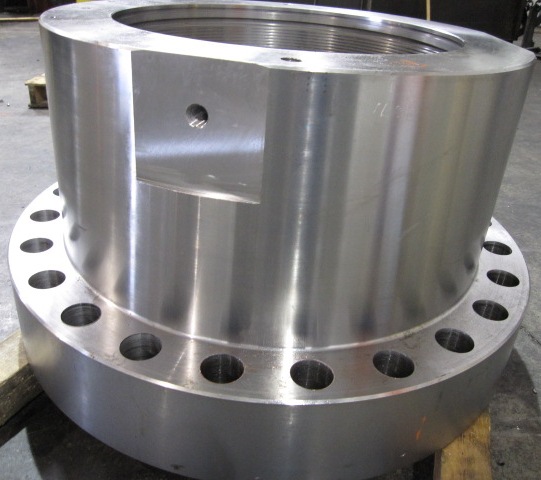
Copper-nickel is more noble than carbon steel, aluminum and zinc, and those will corrode when bolted to it. Copper-nickel is less noble than passive stainless, titanium and graphite, and it will corrode when bolted to those. Area ratio decides how fast. A small steel part against a large copper-nickel surface is the worst case.
Product range
Flange types in copper alloy
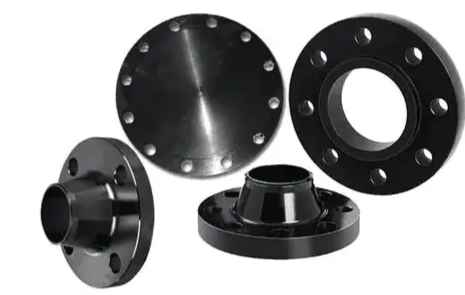
Weld neck
Tapered hub welded to the pipe with a full penetration butt weld. The strongest option, and the one to use where the line sees fatigue, thermal cycling or high pressure.
Slip-on
Slides over the pipe OD and welds inside and out. Cheaper, easier to align, lower fatigue life. The most common copper alloy flange in seawater piping.
Blind
Closes off a line, a vessel nozzle or a future tie-in. In copper alloy it is usually cut from B171 plate rather than forged.
Lap joint with backing ring
A copper alloy stub end with a loose backing ring. Lets you use a cheaper backing ring material and spin the bolt holes into line. Popular where alloy cost matters.
Threaded and socket weld
Small bore work, instrument connections and utility service. Common in bronze to the B16.24 pattern.
Plate and ring
Flat rings cut from copper alloy plate, including AWWA-style ring patterns where a waterworks footprint is needed in a copper material.
Quoting
What to put on the RFQ
Copper alloy flanges are usually made rather than pulled from a shelf, so the quote is only as good as the line item. Give us these and you will get a firm number and a real lead time.
- Nominal size and pressure class, or the drawing if it is off-pattern.
- Alloy and ASTM specification, for example C70600 per B171, not just "copper nickel".
- Flange type and face, weld neck, slip-on, blind, lap joint, and raised face or flat face.
- Bore or schedule on weld neck and slip-on, so the hub matches the pipe.
- Dimensional standard, B16.5 pattern, B16.24 pattern, or a naval spec.
- Design pressure and temperature, so the rating can be worked in the alloy.
- Certification, MTRs, a specific spec revision, or third party witness.
Unsure which alloy? Send the fluid, the velocity and what the rest of the line is made of. That is usually enough to make the call.
Common questions
What is the difference between 90/10 and 70/30 copper-nickel?
C70600 is roughly 90 percent copper and 10 percent nickel. C71500 is roughly 70 percent copper and 30 percent nickel. The 70/30 alloy is stronger, tolerates higher flow velocity, and holds up better at elevated temperature. The 90/10 alloy costs less and handles the majority of seawater piping. Velocity is usually the deciding factor.
Can a copper-nickel flange bolt to a carbon steel flange?
Dimensionally, yes. An ASME B16.5 Class 150 pattern in copper-nickel bolts to a Class 150 carbon steel flange. Electrically it is a problem. Copper-nickel is more noble than carbon steel, so the steel becomes the anode and corrodes at the joint. Use an insulating gasket kit with sleeves and washers, or transition through a spool of the same alloy.
Which standard covers copper flanges?
Two do different jobs. ASME B16.24 covers cast copper alloy flanges and flanged fittings. ASME B16.5 covers the steel flange dimensional patterns, and we machine those same patterns from copper alloy plate, bar and forgings when a project calls for a B16.5 footprint in a copper material. Naval shipboard work often invokes MIL-F-1183 and related fitting specifications instead.
Why use copper alloy instead of stainless steel in seawater?
Two reasons. Copper alloys resist macrofouling, so barnacles and mussels do not colonize the bore the way they do in stainless. And copper-nickel does not pit in stagnant chloride the way 316 does. Stainless is stronger and cheaper, and it wins on clean, moving, high-pressure duty. Seawater that sits still favors copper-nickel.
Do you supply material test reports on copper alloy flanges?
Yes. MTRs are available on all grades we supply. Tell us at the quote stage if you need certified mill test reports, a specific ASTM revision, or third party witness, since that affects which material we pull.
What sizes do you supply?
Texas Flange supplies flanges from 1/2 inch through 203 inches across the full pressure class range. Copper alloy availability is narrower than carbon steel at the large end, so send the size and grade early and we will tell you what is realistic in that alloy.
Copper and copper-nickel flanges, quoted fast
Texas Flange has been supplying industrial pipe flanges out of Houston since 1986, and we source grades that no producer stocks when a job needs them.
Send the print, or send the size, class and grade. Texas Flange quotes quickly.
Request a QuoteOr call 281-484-8325 and ask for the copper flanges desk.